Crane Hire For Remote Sites, Mining Projects And Island Builds Across The Northern Territory
Crane hire in remote northern territory conditions is a fundamentally different proposition to a standard urban lift. The equipment is the same, but everything around it — access, logistics, fuel, ground conditions, scheduling, contingency planning — operates at a different level of complexity. For project managers and contractors working across the NT's remote communities, mine sites and off-mainland islands, the ability to get a crane on site safely, on schedule and with an experienced operator is not just a matter of convenience. It determines whether a project proceeds or stalls.
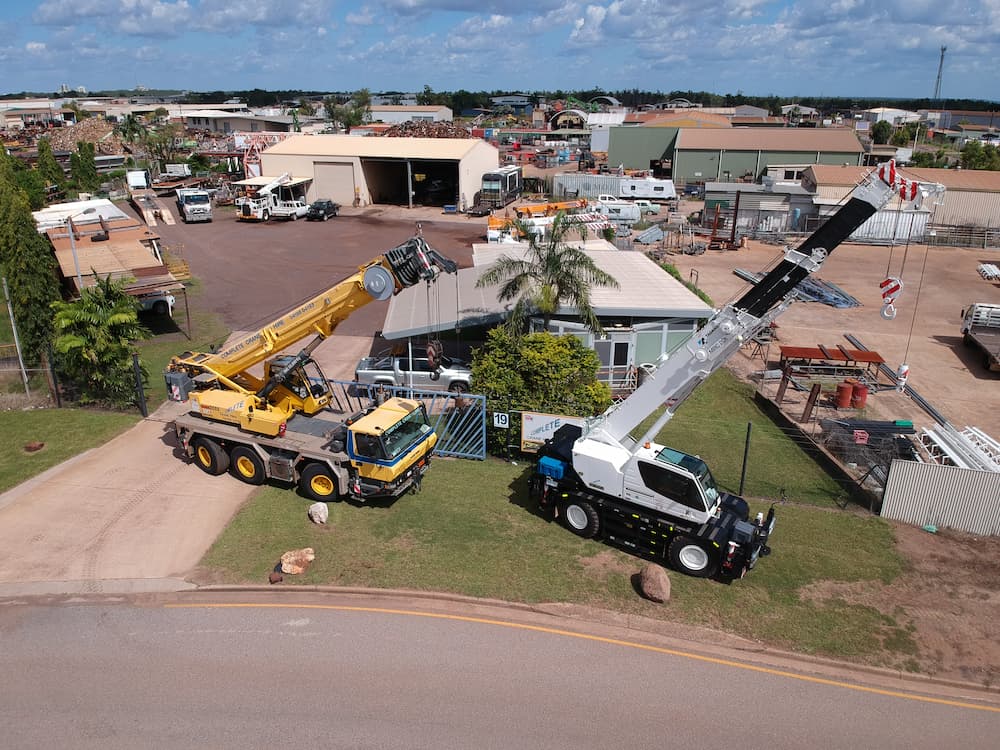
Complete Crane Hire (NT) Pty Ltd has been operating across the Territory for over 20 years, and that experience includes the full range of remote, mining and island lifting challenges the NT presents. This blog covers what remote crane hire actually involves, why barge transport to off-mainland islands works the way it does, and what separates a crane hire provider capable of handling remote conditions from one that is not.
Why Remote NT Projects Need a Different Approach
A crane hire job in Darwin's CBD involves known infrastructure — sealed roads, established access, reliable fuel supply and proximity to workshop support if something needs attention. A remote site job operates without most of those assumptions. The roads may be unsealed, seasonal or subject to wet season closures. The site may be hundreds of kilometres from the nearest town. Ground conditions may not have been assessed for crane operation. Fuel logistics require planning rather than a stop at a servo on the way.
All of this is manageable, but only by a provider that has actually done it. Remote jobs — whether crane hire remote NT community builds, mining crane hire NT shutdowns or barge crane hire northern territory island projects — require detailed pre-planning: route assessment, ground bearing capacity evaluation, site preparation requirements, fuel staging, and contingency planning for weather or access issues that are far more likely when you are working in the Territory's more isolated areas. The consequences of poor planning on a remote site are proportionally more serious. A delay that costs an hour in Darwin can cost days in a remote location where the next available crane is not around the corner and rescheduling affects multiple downstream trades and suppliers.
The Logistics of Remote Site Crane Access
Getting a crane to a remote site in the Northern Territory involves a sequence of planning steps that determine whether the job can proceed on the intended schedule.
Route assessment comes first. Roads that are passable for light vehicles may not support the weight and width of a crane transport. Wet season conditions can close tracks entirely or make them impassable for loaded transports. Bridges, culverts and creek crossings on remote routes may have load limits that affect how equipment is staged and transported. This assessment needs to happen before a date is confirmed, not after the crane is already en route.
Ground assessment at the site is equally critical. Crane operation requires stable ground with adequate bearing capacity under outrigger pads. Remote sites — particularly in areas with clay-heavy soils like much of the NT — can have dramatically different bearing capacity depending on season and recent rainfall. A site that is adequate in the dry can be compromised after wet season rain, and a remote lift attempted on inadequate ground is a safety and equipment risk.
Fuel and operational logistics for extended remote jobs need to be planned alongside the crane deployment itself. A crane operating at a remote site for a multi-day project requires diesel supply, any incidental mechanical support requirements and communication protocols for the operator. These are standard planning items for an experienced remote crane hire provider — and gaps in this planning are where remote jobs run into trouble.
Barge Transport to Off-Mainland Islands
Some of the NT's most demanding crane hire requirements come from communities and development projects on off-mainland islands. The Tiwi Islands, Groote Eylandt and other island locations accessible only by sea present a logistics challenge that goes well beyond a standard remote land-based job. The crane has to get there by barge, which adds a layer of scheduling complexity that is entirely absent from mainland jobs. Barge scheduling is driven by tidal windows, sea conditions and barge availability. Cranes cannot be loaded or offloaded at all states of tide, and sea conditions in the NT's northern waters can be unsuitable for barge operations, particularly during the wet season when the risk of cyclonic weather is present. This means the transport schedule needs to be coordinated with both the barge operator's schedule and the project timeline, with built-in contingency for weather delays.
Loading and securing a crane for barge transport requires rigging and tie-down arrangements that are specific to marine transport. The crane needs to be in a configuration that survives the crossing safely — including any sea conditions that develop during transit — and be ready to deploy for operation when it arrives at the island destination. Offloading at an island site adds another variable. Access points at island communities and remote coastal locations are not always straightforward, and the ground at the offloading point needs to be suitable for crane movement under load. An experienced crew that has carried out barge crane transport knows these variables and plans for them, rather than encountering them for the first time on the day.
Our
crane hire Darwin remote project capability extends across the entire NT — from Darwin to the Tiwi Islands, remote mine sites and beyond. Remote and island logistics require careful scheduling — our guide on
tips for planning your project timeline around crane fleet availability in Darwin is a good starting point for understanding how to structure a project around crane availability.
Mining and Heavy Industry Crane Requirements
Mining and heavy industry projects in the NT present a distinct set of crane hire requirements. The loads are often heavier, the operating environment is more demanding and the consequences of equipment failure or scheduling delays are measured in production losses rather than inconvenience. Mine site lifting tasks include installation and maintenance of processing equipment, structural steelwork, pipe sections, pressure vessels and mechanical components. These lifts often involve working within confined plant areas, lifting over sensitive infrastructure, and coordinating with other trades and shutdown windows where the crane's time on site is precisely defined.
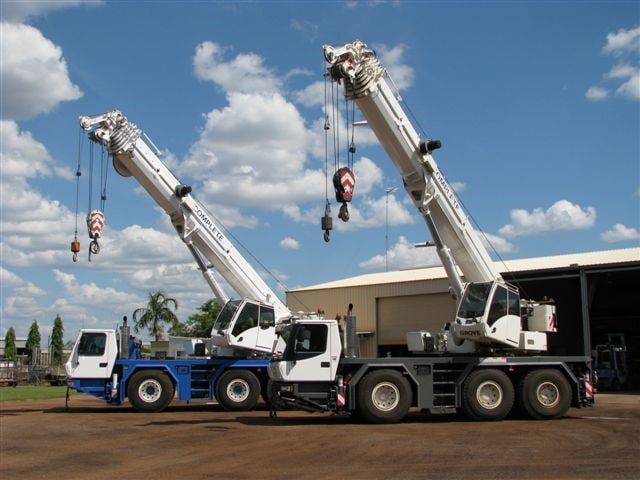
Equipment reliability is not a negotiable variable on a remote mine site. A crane that develops a mechanical issue on a remote mining project has limited options for workshop support, and a breakdown that delays a planned shutdown or construction milestone creates cascading costs across the project. Reliability is everything on a remote mine site where the nearest replacement is hours away — see how our crane fleet is maintained for safety and reliability. The fleet range matters for mining work. A project that requires a 15-tonne pick-and-carry for one phase and a 55-tonne slew crane for another needs a provider that can supply both from the same fleet — eliminating the coordination complexity of managing multiple crane hire companies across a single project or shutdown.
Mining-specific planning requirements include:
- Lift plans that account for confined plant areas, overhead obstructions and load paths within processing facilities
- Coordination with site safety management systems and induction requirements before the crew enters site
- Operator familiarity with working within live plant environments where other operations are continuing around the crane
- Adequate lead time for remote logistics planning so the crane and operator are on site when the shutdown window opens — not en route
Fleet Range and Why It Matters for Complex Projects
The NT's remote and mining projects rarely involve a single simple lift. A construction project on a remote community might need a Franna for pick-and-carry materials handling and a larger slew crane for structural steelwork. A mine site shutdown might involve multiple crane configurations across different phases of the same maintenance window. A fleet that ranges from 15 to 55 tonnes and includes both Franna pick-and-carry and slew crane configurations gives project managers the flexibility to plan across those phases without sourcing from multiple providers. Every additional crane hire provider in a complex remote project is another scheduling dependency, another set of mobilisation logistics and another point of potential delay. As the leading provider of cranes Darwin and across the NT, the Complete Crane Hire fleet covers the range that remote and mining projects actually require, with a crew that has the Territory experience to deploy them in the conditions these jobs present.
Planning Lead Times for Remote and Island Projects
Remote and island jobs require more lead time than standard urban crane hire, and that lead time needs to be built into the project schedule from the outset rather than discovered when mobilisation is being planned.
Factors that extend the planning window for remote crane hire NT include:
- Route and ground assessments that need to be completed before a mobilisation date is confirmed
- Barge scheduling for island jobs, where tidal windows and barge availability constrain the available transport dates
- Wet season weather risk, particularly for jobs planned between November and April when road closures and sea conditions are less predictable
- Coordination with site safety systems and induction requirements for mine site access
- Equipment preparation for extended remote deployment, including fuel planning and any site-specific rigging requirements
For mining and construction projects, the lifting services remote northern territory projects need are best planned with the crane hire provider involved early — at the project planning stage rather than when mobilisation is imminent. Early involvement allows the provider to flag access or logistical issues while there is still time to plan around them.
Why Territory Experience Makes the Difference
There is no substitute for having done it before. The logistical variables that come with remote NT crane hire — the seasonal road conditions, the barge schedules, the ground bearing challenges, the mining site protocols — are not things that can be managed by reading about them. They are navigated by operators and coordinators who have dealt with them repeatedly and know what to plan for.
Complete Crane Hire (NT) Pty Ltd has been providing crane hire remote northern territory projects have relied on for over 20 years. That experience spans remote community construction, island barge transport, mine site shutdowns and heavy industry lifting across the Territory and into the north of Western Australia. Our operators are Territory locals, our equipment is maintained for reliability in challenging conditions and our team manages the full logistics chain from planning through to completion. To discuss your remote, mining or island crane hire requirements, contact us today or call us on 0419 804 193.